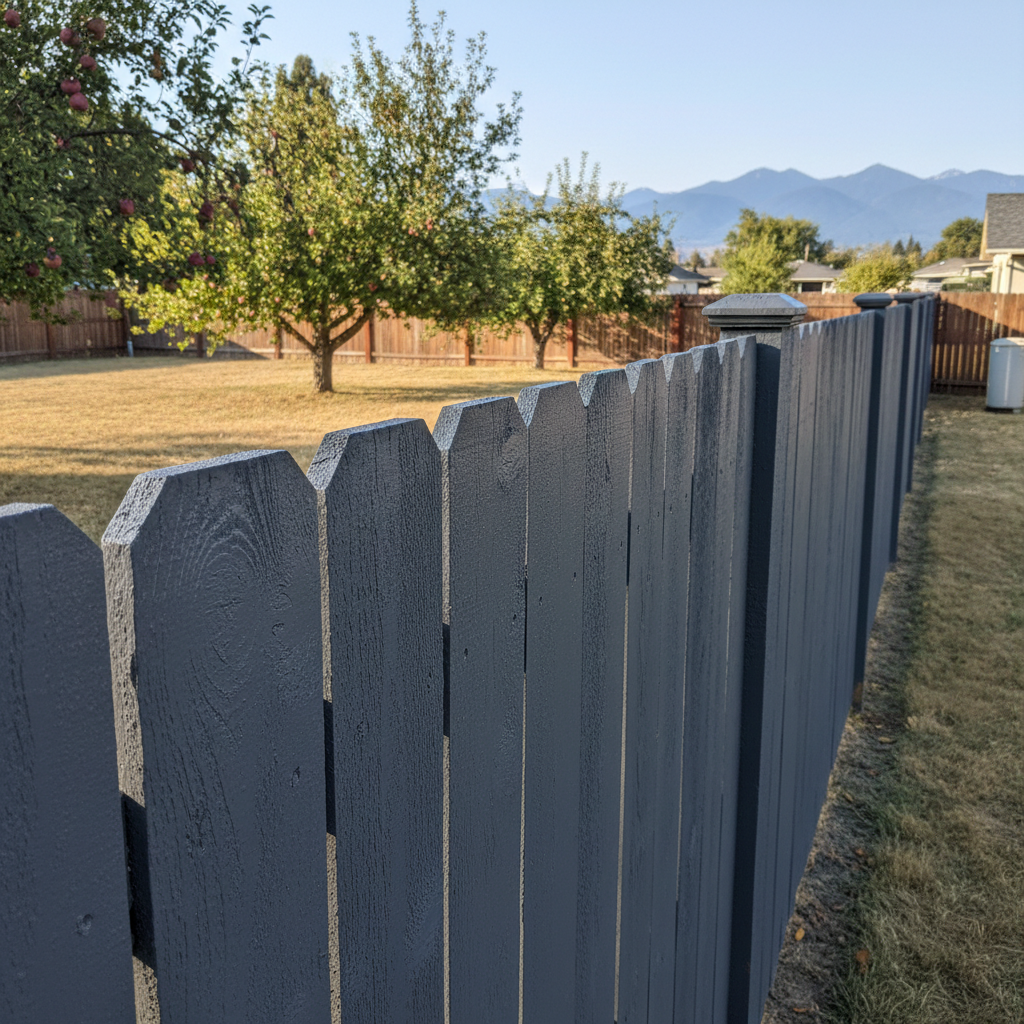
Alright, let's talk fences. You've got one, it's looking a little tired, and you're wondering if a fresh coat of paint or stain is the answer. Good call. A well-maintained fence not only looks better but also lasts a whole lot longer, which is a big deal with our Yakima weather, especially those hot summers and the occasional icy winter snap.
I get a lot of questions from folks around here about fence painting, so I figured I'd just lay out the most common ones and give you the straight scoop. No fluff, just what I've seen working for years.
Do I paint or stain my fence? What's the difference?
This is probably the first thing people ask. It really comes down to the look you want and the protection you need. Paint forms a solid, opaque layer on top of the wood. It gives you a huge range of colors, completely changes the fence's appearance, and offers excellent protection against UV rays and moisture. The downside? It can chip, peel, or blister over time, especially if the prep isn't perfect, and it usually needs more thorough scraping and sanding for future recoats.
Stain, on the other hand, penetrates the wood. You've got transparent, semi-transparent, and solid stains. Transparent and semi-transparent stains let the wood grain show through, which a lot of people prefer for a more natural look. Solid stains give you color but still let some of the wood texture show, and they offer better protection than lighter stains. Stains generally wear down over time rather than peeling, making reapplication easier – often just a good cleaning and a fresh coat. For our dry climate here in Yakima, a good quality stain often holds up really well, preventing the wood from drying out and cracking.
What kind of prep work is actually necessary?
Don't skip this. Seriously. The success of your fence painting project hinges almost entirely on the prep. First, clean the fence thoroughly. A pressure washer is great for this, but be careful not to damage the wood – use a wide fan tip and keep it moving. Get rid of all the dirt, mildew, algae, and loose paint or stain. If you've got mildew, a bleach and water solution (1 part bleach to 3 parts water) works wonders. Let the fence dry completely, usually 2-3 sunny days, before doing anything else.
Next, scrape off any peeling paint or stain. Sand any rough spots or splinters. Replace any rotted or severely damaged boards. Tighten loose nails or screws. If you're painting, you'll want to prime any bare wood, especially if it's new or heavily weathered. Primer helps the paint stick better and gives you a more uniform finish. For staining, priming usually isn't necessary.
How long does fence paint or stain typically last in Yakima?
It varies, but here's a general idea. A good quality exterior paint, properly applied, might last 5-7 years, sometimes even longer if it's not getting direct, harsh sun all day. Solid stains can last 3-5 years. Semi-transparent stains usually need reapplication every 2-3 years, and transparent stains or sealers might be annual or biennial. The south-facing side of your fence, which gets hammered by our strong Yakima sun, will almost always need attention sooner than the other sides. The type of wood also plays a role – cedar tends to hold finishes better than some other woods.
Can I paint over old stain, or stain over old paint?
Generally, you can paint over old stain, but you need to make sure the stain is completely clean, dry, and not peeling. You'll definitely want to prime it first to ensure good adhesion and a consistent finish. Trying to stain over old paint is a different story. Paint forms a film, so stain won't be able to penetrate the wood properly. You'd have to completely remove all the old paint – and I mean ALL of it – which is a huge job, often not worth the effort for a fence. If your fence is painted and you want to stain it, you're probably better off just repainting it.
What's the best time of year to paint a fence in Yakima?
Our spring and fall are usually ideal. You want temperatures between 50-85 degrees Fahrenheit, and you need a few days of dry weather with no rain in the forecast. Avoid painting in the direct, blazing sun of July and August; the paint or stain can dry too quickly, leading to brush marks, poor adhesion, and an uneven finish. The early morning or late afternoon during summer can work, but spring and fall offer more forgiving conditions. Plus, the pollen count is often lower, which means less stuff sticking to your wet paint.
Should I DIY or hire a professional?
This depends on a few things: the size of your fence, its condition, your available time, and your comfort level with the work. If you've got a small, well-maintained fence and you enjoy DIY projects, go for it. But if you have a long fence, it's in rough shape, or you just don't have the time or patience for the extensive prep work, hiring a pro like Yakima Painting Company is probably a smarter move. We've got the right equipment, the experience to handle different wood types and conditions, and we can get it done efficiently and with a quality finish that lasts. It can save you a lot of headaches and backaches in the long run.
Look, a good fence job isn't just about slapping on some color. It's about protecting your investment and making your home look its best. If you've got more questions or want to talk about your specific fence, don't hesitate to reach out. We're always happy to help our neighbors here in Yakima.